About EVACSIM

Learn about EVACSIM, our AI-assisted emergency evacuation simulator. Discover the problem we aim to address, our proposed solution, the project's objectives and how interactive 3D simulations can support emergency preparedness and evacuation training.

Project Overview

EVACSIM is an AI-assisted emergency evacuation simulator designed to help users practise and understand how people can evacuate buildings during emergency situations. The application allows users to upload a 2D building floor plan. AI-assisted recognition is then used to identify important building elements, such as walls, rooms, doors and windows. Using this information, the system generates a 3D building environment in Unreal Engine, which users can inspect and prepare for an evacuation simulation.

The main purpose of EVACSIM is to provide an interactive environment where users can practise evacuation scenarios rather than relying only on instructions or observation. The simulator is intended to support people involved in building safety, emergency preparedness and evacuation training, including students, building occupants and training organisations.
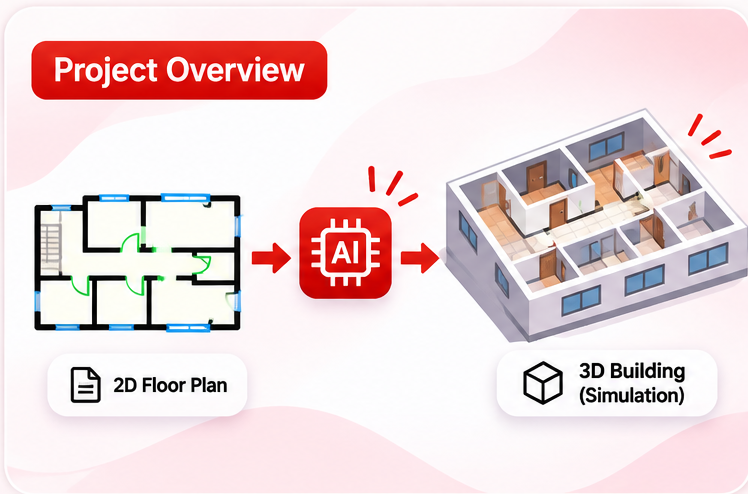
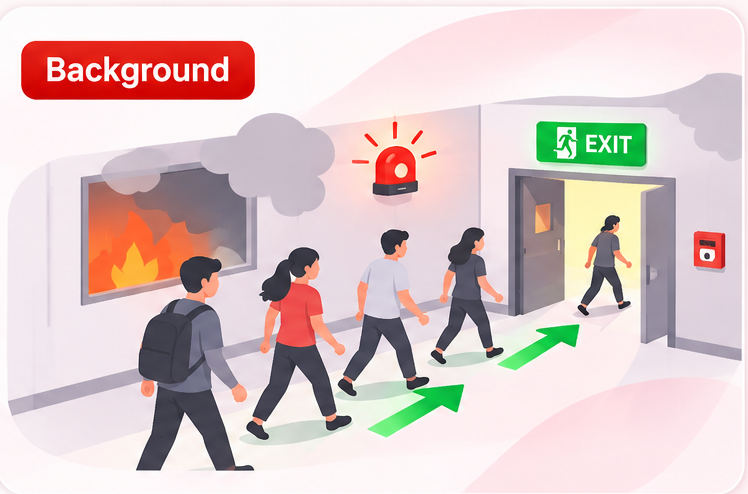
Illustration of a 2D floor plan being analysed by AI and transformed into a 3D building

Background

Emergency evacuation training helps people understand how to respond when they need to leave a building because of an emergency, such as a fire. A common way to prepare occupants is through planned evacuation drills. During these drills, people practise following emergency procedures, using escape routes and reaching a designated assembly point. Drills can also help organisations identify problems with their evacuation procedures.

However, carrying out a real evacuation drill can require planning and coordination, and it may interrupt normal activities within a building. Research has also highlighted challenges in assessing how effective drills are and how well their results represent people's behaviour during unexpected emergencies. This creates an opportunity for simulation-based training to provide an additional way to practise different scenarios and review evacuation performance in a controlled environment.

13,591 evacuees

A research database brought together pre-evacuation information from 103 evacuation drills and 9 fire incidents across 16 countries, involving a total of 13,591 evacuees. This demonstrates the importance of collecting and analysing evacuation data to understand how people respond during emergencies.

Source: Lovreglio, R., Kuligowski, E., Gwynne, S. and Boyce, K. (2019), A Pre-Evacuation Database for Use in Egress Simulations. Read the research .
Illustration of people evacuating a building during an emergency

Problem Statement

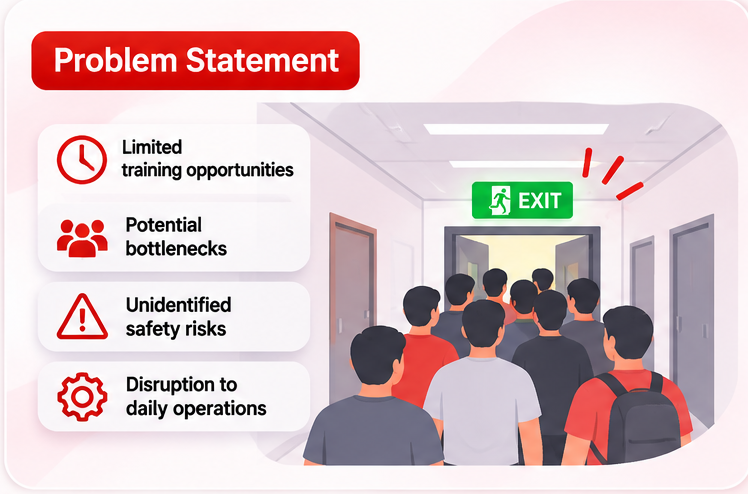
Traditional evacuation drills allow people to practise emergency procedures, but they do not always provide an easy way to experience a wide range of emergency situations in a controlled and repeatable environment. Organising different drills can require time and coordination, while evaluating how people respond and identifying areas for improvement can also be challenging.

In addition, practising an evacuation for a specific building requires an understanding of its layout, including rooms, doors, corridors and possible escape routes. Without an accessible way to recreate that layout and simulate different emergency conditions, it can be difficult to provide repeated, interactive practice and consistently review evacuation performance.

EVACSIM aims to address this gap by providing a system that can convert a building floor plan into a 3D environment and use it for configurable emergency evacuation simulations. This gives users an additional way to practise scenarios and review the results.

Illustration showing a crowded evacuation corridor and potential safety challenges

Our Proposed Solution

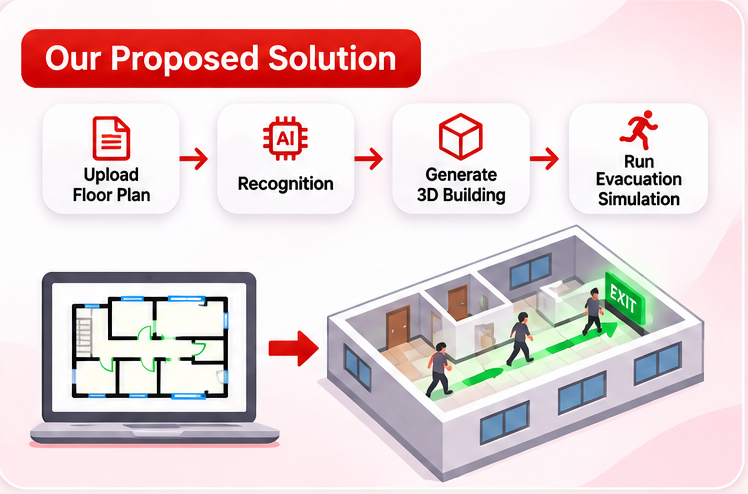
EVACSIM proposes an interactive evacuation simulator that transforms a 2D building floor plan into a 3D environment that can be used for emergency training. AI-assisted image recognition identifies important building elements, such as walls, rooms, doors and windows. The recognised information is processed and used to generate the building environment in Unreal Engine.

Users can inspect the generated building and make corrections where necessary before setting up an emergency scenario, such as a fire. They can then experience the evacuation simulation and review information about the outcome, including evacuation time and the number of occupants evacuated. This provides an opportunity to practise different situations and evaluate performance in a controlled virtual environment.

Illustration of the EVACSIM workflow from floor-plan upload through AI recognition to 3D evacuation simulation

Project Aim

The aim of EVACSIM is to develop an AI-assisted emergency evacuation simulator that converts 2D building floor plans into interactive 3D environments, allowing users to practise emergency evacuation scenarios and evaluate their performance.

Project Objectives

Sustainable Development Goals

EVACSIM is aligned with the United Nations Sustainable Development Goals (SDGs), particularly SDG 11 and SDG 3. By providing a virtual environment for emergency evacuation practice, the project aims to support awareness, preparedness and safety.

SDG 11 – Sustainable Cities and Communities

EVACSIM supports SDG 11 by focusing on emergency preparedness and safer, more resilient communities. Its evacuation simulator provides a way to practise emergency scenarios in virtual building environments. This can help users understand evacuation procedures and identify potential difficulties before facing a real emergency.

SDG 3 – Good Health and Well-being

EVACSIM relates to SDG 3 by promoting knowledge and preparedness that may help protect people's health and well-being during emergencies. By allowing users to practise evacuation procedures and review simulation outcomes, the project aims to improve awareness of how to respond to potentially dangerous situations.